
80% of Cyber Attacks Happen Due to User Negligence: Why the Human Factor Is the Biggest Security Vulnerability
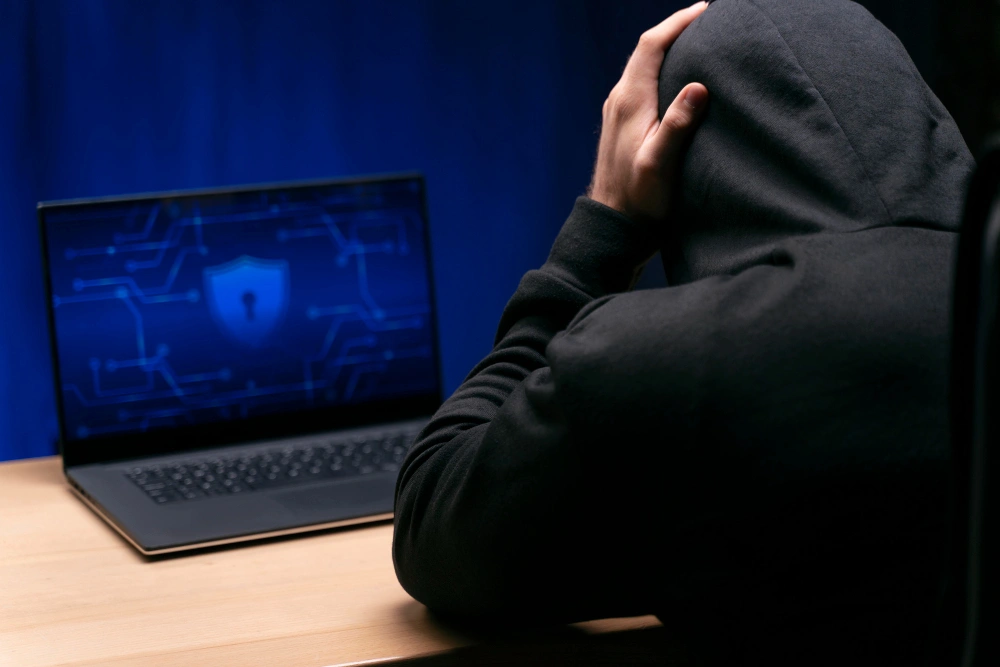
Most causes of cyber attacks due to human error come from user mistakes such as clicking phishing links, using weak passwords, or sharing information without verification. Even as security systems become more advanced, the human factor in cybersecurity remains the most vulnerable point often exploited by hackers.
Many companies only realize there is a problem after an incident occurs—accounts are suddenly accessed by unauthorized parties, data is leaked, or systems are disrupted without a clear cause. Upon investigation, it turns out the issue is not weak systems, but a small overlooked action by a user.
In many organizations, security systems have already been strengthened—firewalls are active, antivirus is installed, and monitoring is in place. Yet incidents still occur, and often the root cause is not the system, but small user actions that seem trivial but have major consequences.
Why the Human Factor Is the Biggest Weakness in Cybersecurity
The human factor in cybersecurity becomes the biggest vulnerability because while technology can be strengthened, user behavior is much harder to control.
1. Modern Security Systems Are Becoming Stronger
Most companies today use firewalls, antivirus software, and advanced threat detection systems. Technically, these layers can prevent many system-based attacks such as malware or software exploits. However, these protections are only effective if they are not unintentionally bypassed by users.
2. Users Remain the Weakest Link
Human error in cybersecurity often happens in daily activities—logging into public networks, opening emails without verification, or downloading files carelessly. These small actions can become entry points for hackers without needing to breach the main system. This is why human behavior is harder to control than technology.
3. Human Error Is the Primary Target for Hackers
Modern cyber attacks no longer focus on breaking systems but on exploiting human behavior. Hackers understand that it is easier to deceive users than to penetrate complex security systems. As a result, many attacks are specifically designed to trigger user responses.
Common User Mistakes That Lead to Cyber Attacks
Small user mistakes often become the starting point of major cybersecurity incidents.
1. Clicking Phishing Links in Work Emails
Phishing emails are designed to closely resemble official company communications, complete with logos and professional formatting. When users click on the link, they are redirected to fake login pages that steal usernames and passwords. In many cases, users do not realize their data has been compromised.
2. Using Weak or Easily Guessable Passwords
Simple passwords or using the same password across multiple accounts creates a major security risk. Through techniques like brute force or credential reuse, hackers can gain access within minutes. This remains one of the most common causes of data breaches.
3. Sharing Sensitive Information Without Verification
Users often provide important information because they believe the request comes from an internal source. Without proper verification, sensitive data such as customer information or system access can fall into the wrong hands. This frequently occurs in fast-paced communication like emails or chats.
How Hackers Use Social Engineering
Social engineering cyber attacks exploit human psychology to gain access without hacking systems directly.
1. Impersonating HR or Colleagues
Hackers often pretend to be HR personnel, managers, or coworkers to request data or access. Because the request appears familiar and relevant, users tend to respond without suspicion. This method is highly effective in dynamic work environments.
2. Using Urgency and Panic Tactics
Messages such as “your account will be blocked within 1 hour” create a sense of urgency that pushes users to act quickly without verification. In panic situations, people are less likely to question the authenticity of the message. Hackers exploit this to accelerate their attacks.
3. Mimicking Official Company Communications
Social engineering attacks often replicate official email designs, domains, and communication styles. Some even use domains that closely resemble legitimate ones. This makes it difficult for users to distinguish between real and fake communications.
Comparison: System-Based vs User-Based Cyber Attacks
Cyber attacks do not only occur through system vulnerabilities, but also through user interactions.
| Type of Attack | How It Works | Example | Risk |
| Technical Attack | Exploits system vulnerabilities | Software exploit | Can be prevented with patches |
| Phishing Attack | Tricks users into giving access | Phishing email | Credentials stolen |
| Social Engineering | Manipulates human psychology | Impersonating HR | Data leakage |
| Password Attack | Guesses or steals passwords | Brute force | Unauthorized account access |
This table shows that user-based attacks are now more common because they are easier to execute than technical attacks.
Modern Approaches to Reducing Human Error Risk
Reducing human error in cybersecurity requires a combination of technology and behavioral awareness.
1. Cybersecurity Awareness Training for Employees
Regular training helps employees recognize attack patterns such as phishing and social engineering. With better awareness, users can identify suspicious activity before it becomes a threat. This transforms users from a weak point into a line of defense.
2. Implementation of Multi-Factor Authentication (MFA)
MFA adds an extra layer of security beyond passwords, such as OTP codes or authentication apps. Even if passwords are compromised, hackers cannot easily access the system. This significantly reduces the risk of unauthorized access.
3. Monitoring User Access Activity
Monitoring systems allow companies to track user activity in real time. Suspicious behavior, such as unusual login locations, can trigger alerts immediately. This enables early detection before major damage occurs.

Why Companies Are Adopting Zero Trust Security
Zero Trust is a modern approach to addressing risks related to the human factor in cybersecurity.
1. “Never Trust, Always Verify” Principle
Every access request must be verified, even if it comes from within the organization. This removes the assumption that internal users are always safe and reduces insider threat risks.
2. Role-Based Access Control
Each user is granted access based only on their job responsibilities. For example, marketing teams do not need access to financial systems. This limits the impact if an account is compromised.
3. Protection of Applications and APIs from External Threats
Applications and APIs are prime targets for modern cyber attacks, requiring dedicated protection such as Web Application Firewalls (WAF). These systems filter malicious traffic before it reaches the server, reducing risk from the start.
Summary: Why Cybersecurity Is Not Just About Technology
Most causes of cyber attacks due to human error stem from unsafe user behavior such as clicking phishing links, using weak passwords, or sharing sensitive information without verification. Modern attacks like social engineering are becoming more sophisticated because they target human psychology rather than systems.
To address this, companies must combine technology with user awareness through training, as well as implement security measures such as MFA, monitoring, and Zero Trust architecture. With this combination, businesses can significantly reduce risks and build stronger, more adaptive security systems.
FAQ – Cybersecurity and Human Error
Here are some frequently asked questions related to the human factor in cybersecurity and how to prevent cyber attacks in companies.
1. What is the main cause of cyber attacks in companies?
One of the main causes is human error, such as clicking phishing emails or using weak passwords.
2. What is social engineering in cyber attacks?
Social engineering is a psychological manipulation technique used by hackers to trick users into providing access or sensitive information.
3. Why are weak passwords dangerous for companies?
Weak passwords can be easily cracked, allowing hackers to gain unauthorized access to company systems.
4. How can companies reduce cyber attack risks?
Companies can improve security through employee training, MFA implementation, activity monitoring, and modern security systems.
5. What is Zero Trust Security?
Zero Trust is a security approach where every access request must be verified, without automatically trusting users or devices.
Ultimately, cyber attacks are not always caused by weak systems, but often by small user mistakes that go unnoticed. By strengthening both technology and user awareness, companies can build a more resilient security foundation and reduce the risk of future incidents.
Protect Your Business from Hidden Security Vulnerabilities
To protect your business from cyber threats, companies must combine user awareness with strong security systems. Smart IT helps you implement cyber security solutions such as Web Application Firewall (WAF) and Zero Trust Security, ensuring your systems and data are fully protected—contact our team today for a consultation.
PT SMARTIT MANTAP DIGITAL INDONESIA
Vieloft Ciputra World, Suite 10-01.
Kompleks Superblock, Ciputra World
Jl. Mayjen Sungkono No.89 Surabaya, Jawa Timur, Indonesia 60224
Telepon: +6281130576888 / +628113426391
Email: hello@smart-it.co.id
Facebook: Smart IT Indonesia
LinkedIn: Smart IT Indonesia
Instagram: smartitcoid