Digital Business Transformation 2026: Where to Start to Avoid Costly Mistakes?

Digital business transformation in 2026 should begin by identifying operational bottlenecks, prioritizing the most impactful processes, and implementing digitalization gradually through an integrated and scalable ERP system.
Entering 2026, almost all business owners agree that digitalization is no longer optional—it is essential. However, in reality, many companies remain stuck in the planning stage because they are unsure where to begin. Some immediately purchase expensive software, some replace multiple systems at once, while others delay the process out of fear of making the wrong move.
The issue is not a lack of technology, but a lack of strategy. Digital business transformation in 2026 must start from real operational needs, not from trends. Below are practical steps that can serve as a realistic and sustainable foundation for business process digitalization.
Start by Identifying Manual Process Bottlenecks
The most logical first step in corporate digital transformation is mapping manual processes that frequently slow down team performance. A simple audit of duplicate data entry, manual reporting, or slow approval flows will reveal weak points that need immediate improvement. These bottlenecks should become primary candidates for digitalization because their impact on daily efficiency is immediate.
Without this identification process, companies risk digitalizing non-critical processes, resulting in technology investments that fail to significantly improve operational performance.
Focus on Processes That Cause Frequent Delays
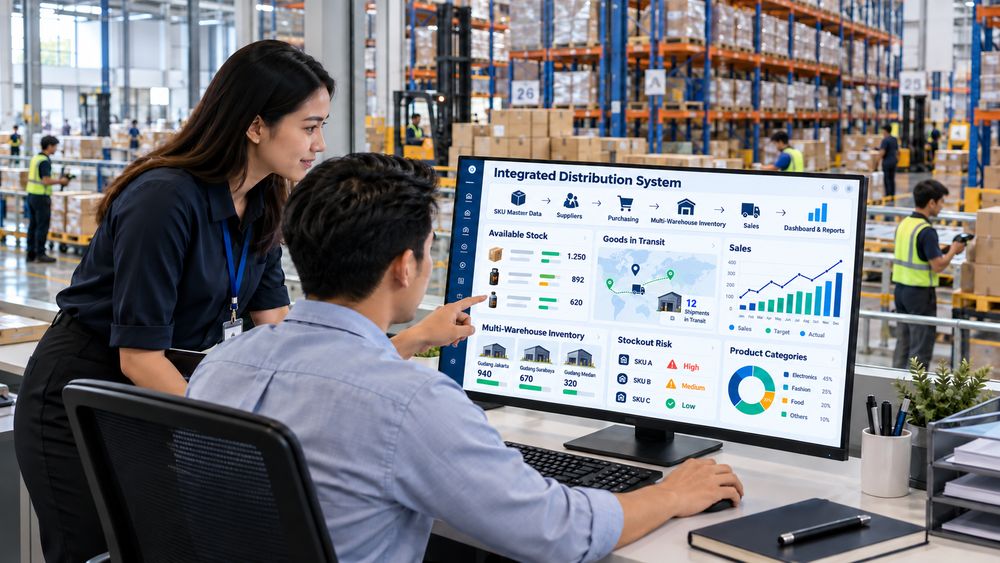
Not all processes have equal impact on business performance. Prioritize those that frequently create work queues, input errors, or interdepartmental complaints. Areas such as inventory, sales orders, or purchase approvals often become recurring sources of delays.
By starting with the most problematic processes, companies can see tangible results within a relatively short time. This also helps build internal trust that digitalization truly delivers positive change.
Consolidate Data into a Centralized System
Digital business transformation in 2026 will not be effective if data remains scattered across different platforms. Using POS systems, marketplaces, Excel files, and manual reports separately often leads to data inconsistencies and makes decision-making more difficult.
An ERP system for business plays a crucial role in unifying inventory, sales, purchasing, and financial reporting into one centralized platform. With consolidated data, management can view real-time business performance without waiting for manual recaps.
Eliminate Dependency on Manual Cross-Department Reporting
Digitalizing business processes also means reducing reliance on manual reporting between departments. When sales, warehouse, and finance teams still exchange files manually, the risk of human error increases and decision-making slows down.
System integration allows data to be automatically shared across departments without repeated input. Besides improving accuracy, this approach accelerates workflows and reduces non-productive administrative burdens.
Begin Digitalization with the Most Critical Modules
Starting digital transformation does not mean replacing all systems at once. A safer strategy is to begin with core modules such as inventory, sales, purchasing, or basic accounting that have the strongest operational impact.
With this approach, companies can test team readiness while experiencing immediate benefits from implementing an ERP system. Once stabilized, additional modules can be introduced gradually according to evolving needs.

Apply a Gradual Approach to Help Teams Adapt
Digital transformation is not only about technology—it is also about people. Sudden changes often trigger internal resistance because teams feel overwhelmed or unprepared.
A gradual approach improves adoption rates and gives teams time to learn. Structured training and clear communication ensure a smoother transition with minimal operational disruption.
Choose an ERP That Is Scalable and Easy to Integrate
An ERP system should adapt to the way a company operates—not force the company to adjust to rigid system limitations. Modular solutions such as Odoo allow businesses to start with one module and expand according to operational needs.
This flexibility enables companies to adjust their systems as they grow without requiring total migration in the future. It ensures that digital business transformation in 2026 remains relevant in the long term.
Ensure the System Can Connect with Existing Applications
Digital transformation rarely means building everything from scratch. Many companies already use marketplace platforms, HR systems, or marketing tools.
Therefore, the chosen ERP must be able to integrate with existing systems, mobile applications, and supporting tools. Strong integration ensures that business process digitalization runs smoothly without disrupting established workflows.
Conclusion
Digital business transformation in 2026 is not about replacing software on a massive scale, but about setting priorities and executing strategically. Starting from identifying bottlenecks, centralizing data, eliminating manual recaps, and selecting a flexible, integrated ERP system—each step must align with operational needs.
With a gradual and scalable approach, companies can build a strong digital foundation without disrupting business stability.
Start Digital Transformation with the Right Strategy, Not Just by Replacing Software
Successful digital transformation always begins with careful planning and a deep understanding of internal processes not simply by following trends in 2026.
Smart IT helps businesses identify operational bottlenecks, define digitalization priorities, and implement solutions such as Custom ERP and Odoo ERP that are designed to grow alongside your company.
Consult your digital business transformation plan with our team and ensure your next step becomes the foundation for long-term growth—not a new source of operational challenges.
PT SMARTIT MANTAP DIGITAL INDONESIA
Vieloft Ciputra World, Suite 10-01.
Kompleks Superblock, Ciputra World
Jl. Mayjen Sungkono No.89 Surabaya, Jawa Timur, Indonesia 60224
Telepon: +6281130576888 / +628113426391
Email: hello@smart-it.co.id
Facebook: Smart IT Indonesia
LinkedIn: Smart IT Indonesia
Instagram: smartitcoid